
STOP PERSECUTING MEMOIRISTS.
Or we die

With thanks to Kate Clanchy and Ruth Saberton.
I’m coming in hot with a bit of a polemic here so strap in and get your popcorn.
Those who have so kindly followed me for a while will know that this is a bone of contention for me and something which increasingly I am not prepared to let slide by.
Why? Because it is fundamental not just to the memoir genre, but to writers, and society, in general.
Let’s start with society.
Do we want anarchy, tyranny or democracy?
I am history graduate so used to handling evidence, a retired litigation lawyer (so used to ..blar, blar) I have worked at the sharp end of human rights law- not how to thwart ECHR and give lottery win damages to murders- but getting food into the mouths of old fashioned famine victims. I guess that provides the hostile reader/reviewer/agenda follower with their first ammunition. As a white person trying my best I must be a ‘white saviour’. Well, that one is for free – all the name calling in the world isn’t going to dent my honour and pride of working in emergency relief for a decade.
What did my field experience show me? It showed me what Anarchy and tyranny look like up close and personal.
I have emptied my stomach of Larium and cowered beside my bed as a gun fight took place out in the street below whilst staying in the Hotel Milles Collines in Kigali (of Hotel Rwanda fame,) This was in the aftermath of the Rwandan genocide. I had tried to eat dinner in the hotel gardens, but wind outside carried the thin distant screams of the vanquished being tortured. During I was moved around in vehicles with guns on the roof. I have averted my eyes from burnt out ‘necklaced’ bodies. I have looked into red bloodshot eyes of fear. This is what anarchy looks like. In the absence of rule of law, anarchy is rule by violence.
I have lived in Pyongyang, capital of DPRK or as you know it North Korea. 100% literacy. 100% obedience. I have looked into the dead fish eyes of those who believe the government can read their very thoughts. Tyranny is compliance enforced by violence of the state.
Anarchy/tyranny = fear
Democracy = freedom
I am no political scientist. I have not read all the books or all the memoirs, I am not qualified to hold a view but, in my limited experience if you don’t want anarchy or tyranny then you need a working form of democracy. Any form. I don’t have a preferred type of democracy or way of voting or enfranchisement to promote. But if you want to avoid survival of the fittest in anarchy or tyranny (and as a woman I definitely do) , if you want to leave space for science and evolution then the following pillars support the temple of democracy:
1. Universal secular education
2. Fair and frequent elections to the enfranchised population, with politicians held to their mandates
3. A nimble and just legal system
4. FREEDOM OF SPEECH.
Without freedom of speech democracy collapses.
Who are the custodians of freedom of speech?
Everyone.
Us.
Not the state.
But of those who are heard the most, with the most influence? Those whose words can be amplified to the widest audience? Social media stars. TV and film industry. Journalists.
Writers.
Memoirists.
Each and every one of us who communicates to another human being does so taking advantage of freedom of speech. From the pillow whisper to the social media post. But at the same time as reach is expanding through social media so the net of control is tightening over them through the same means.
Most serious crimes in the UK demand two factors to be met- mens rea and actus rea. That is intent and act/commission. But these days the act can be the simple act of expressing your thought or belief. Are we moving in the direction of DPRK? I don’t know. Ask Lucy Connolly. Or ask the pro-lifers who don’t have the freedom of thought and cannot loiter near abortion centres.
Without freedom of speech there is no Substack there is just subtle or unsubtle propaganda promoting one ideology or another. Is that where we are, or where we are headed?
Do external forces want to influence/control/shape the narrative? Of course they do.
Will they do this by fair means or foul? Of course they will.
This is not new. Machiavelli in The Prince talked about the value of free speech but also how princes had to control the narrative. Ask Putin if it is better to be feared or loved.
The legal framework
In a functioning democracy you should be able to trust that the laws will be fair, justly applied and capable of quick evolution in response to changes. In the UK, in theory at least, we have/had this. On the assumption that the judges fairly enforce the law. (allow me a hollow ho ho ho)
Our law gives us freedom of speech (ish) provided you cannot defame/slander a living person.
A conflicting premise is that living person under Human rights/ ECHR law has a right to privacy.
So we have freedom of speech but within barriers which seems a reasonable compromise.
What does that mean to the writer? It’s probably not a good idea to name and shame any identifiable living person in your book unless you have a watertight defence of truth that you are prepared to bank on.
The takeaways for the memoirist are
1. Disguise the character so they are not easily identified
2. Minimise the characters to those who drive the plot forward to avoid inadvertent collateral risk
3. Make sure that anything said is true, ideally with evidence sufficient to rely on as a defence
The right to privacy is a difficult one as, if everyone enforced it, we would only have memoirs about their pets or plants or themselves.
But I don’t have a problem with this. I think there is a balance to be had between the writers desire to tell a story, (and not over egging it with exaggeration particularly if that leads to harm in the real world, Netflix Baby Reindeer for example) and everyone else who, let’s face it, may not have been looking for a starring role in our memoirs.
As writers let us hope that we can embrace an informal professional standard ethic that allows us to tell our stories fairly and responsibility.
This is where the line should be drawn- writers complying with sensitive fair laws arising from a functioning democracy protecting free speech at its heart.
But this is NOT what is happening.
Truth as a defence to omission.
Readers will know that I recently spat feathers over some Goodreads reviews that criticised me for following ‘gender norms’ and by implication for the omission of not having DEI characters. Even though it is a children’s story it is completely true and was written as lived (although I used artistic licence to speculate what the rescued slug was thinking. So shoot me).
Is truth a defence for the writer and is a reference to inclusion now mandatory?

Is truth a defence for the writer?
Having looked into the reviewers of various books it seems to me that there is a clear pattern of certain reviewers cancelling or downgrading books if they do not align with their politics. They do not declare their politics but it was pretty easy to construct it from the books they like, do not like, and the reasons why.
To criticise a book because it does not comply to your political world view is sinister. (act)
To criticism a book because it is silent on issues you think every single book should promote is sinister. (omission)
It is particularly sinister that the book in question, mine, was directed for children 5 years and under. Capture is early. It is the application of the Jesuit premise- ‘Give me a child until he is seven and I will give you the man’
For me, sorry to use emotive words, but this is intentional influencing of books to young minds tantamount to grooming them to particular political views. I don’t think it is accidental.
Reviewers/publishers/authors know full well that poor ratings deter sales and they can effectively silence authors. They are both undermining the free speech and forcing the championing of their political cause.
The thing is, some of these reviewers review thousands of books a year. That gives them more credibility in the system so their reviews rise to the top and keep influencing buyers. But that many books? I don’t have the hours to read thousands of books in a year. I have to work, and sleep. Do these people have to work- or are they funded by the causes they champion? People are paid to lobby politicians so it doesn’t seem unreasonable to me that people whose are spending career level amounts of time reviewing and criticising books in a consistent way that supports a given issue …are being paid for it? Who knows. Maybe someone should investigate.
Sensitivity readers
‘Sensitivity readers’ are censors. It is almost as if someone has said – check out what is being harshly reviewed on Goodreads, and comb it out so we are politically correct and therefore more commercial viable.
Arguably they have an advisory role in the world of fiction for inadvertent offence. But they have no place in memoir. The key person in memoir is the author. The world is seen through their eyes, with their experiences informing the narrative, with the morals of that era. Surrender to the sensitivity warriors and you turn authors of memoirs into puppets.
What is truth?
Truth relies on facts. Facts are relatively easy to prove. Facts are also relatively easy to omit. Intention, knowledge come into play. You only have to attend one trial of earnest truthful witnesses twisting different interpretations from the same facts to know that there are as many truths as there are tellers. They are all versions of the truth.
Or perhaps Bake Off better illustrates my point to show how many diverse things can be made from the same core ingredients/facts. Sometimes even when they are following the same recipe. Truth is like Bakeoff. The ingredients are the facts. They come out differently, sometime very differently according to the chef.
In my view, the more primary evidence (diaries, tickets, programmes, etc) and the closer to the event the more likely a particular story is likely to be ‘true’ and close to its facts. But I don’t want to read a dry shopping list of facts. That is not what memoir is.
As I mentioned in a previous note I think there are fundamentally three different author approaches to building a narrative.- sculptors, potters and quilters.
Sculptors- As a historian/lawyer I go back to contemporary evidence, copy out my diaries and then chop them back into the narrative. I sculpt diaries of say 330k words down to 95k words trying all the time to remain faithful to the facts/text.
Potters- Some people start with a blank piece of paper and evolve the story adding layers and details on top.
Quilters-they write chapters and then try think up a way to stitch it cohesively together.
All three types end up with ‘their darlings’ killed and on the floor. Are these missing words part of the truth? Yes, should the author allow ‘ the truth’ to be edited out, or shaped. Yes. That is the craft. We are not replicating real life. We are not writing the truth, the whole truth and nothing but the truth. We are telling a narrative at a pace and relevance that is sufficient to lock the reader in (we hope) but not bore them rigid with every last sigh, tear or thought.
But now there is yet another new burden for the author. Beware of implications
Implications.
The unedifying attacks that continue to pile on again Raynor Winn for The Salt Path are shocking and not shocking.
Not shocking because, if jumping on the bandwagon makes money then for sure media will do it.
Shocking because-
The rage is that Winn implied that walking the Salt Path cured Moth of his ailments.
Well frankly, when things hit rock bottom you don’t have the stress and fear of that happening any more. This will definitely make you feel better. Generally speaking exercise and a simple diet is supposed to make you feel better. For me that is commons sense- if you terminate a source of stress, eat simply and exercise you are likely to feel better. I’ve lost legal cases. Honestly at least then it is over.
I don’t recall at any point Raynor adopting medical qualifications, promoting ‘The Winn way to health’, or indeed having visions of a Holy Mary floating about the sea who could effect miracle cures. But she is accused of this by IMPLICATION.
What?
So she is being tarred and feathered not from something she said but because another reader implied that this was what she was saying and now that it turns out there is no such cure thinks they have been let down? Oh come on. If you want a cure or advice on a medical issue do you go to a doctor/specialist or browse the titles for memoirs at memoir at Waterstones?
The thing about implications is that they are like ghosts. They are weak, they don’t really exist. Implications are not reliable. Pretty much ever. If implications were a person they would be married to ‘Assumptions are the mother of fuck ups’
We are already being held accountable for what we write.
We are already being held accountable for what we omit to write
And now we are being held accountable for what we may have implied?
We cannot have writers held to this high a bar.
It is impossible to write about anything if you have to have a manuscript evaluated for an implied message.
Are we going to have to insert a disclaimer? Okay so here is one from me. I am on the roll of solicitors, but as I am retired I do not hold a practicing certificate so anything I say above verify with your own lawyers. I am not medically qualified, diet and health may make you feel better, ask a doctor. I am not a chef. Watch Bake off for recipes. I don’t intend to offend anyone, if you take offence none has been intended -or implied.
We tell the truth, our truth based on facts. The reader accepts the fundamental truth – the provable facts- the rest they should take with a pinch of salt, and maybe add a histamine if their skin is a bit sensitive.
AI
It takes a long time to write a book. A long time to do a sensitivity comb through. A long time to chew a pencil and think of every single legal, cultural, scientific, medical implication. Wouldn’t it be easier to just get AI to do it?
In fact, why have a writer at all? AI knows all the rules of what can/cannot be said/ omitted so why don’t we just give up on writers full stop? Funny how the very industry that is railing against AI is making it nigh in impossible for authors to publish without risking severe repercussions from impossible standards.
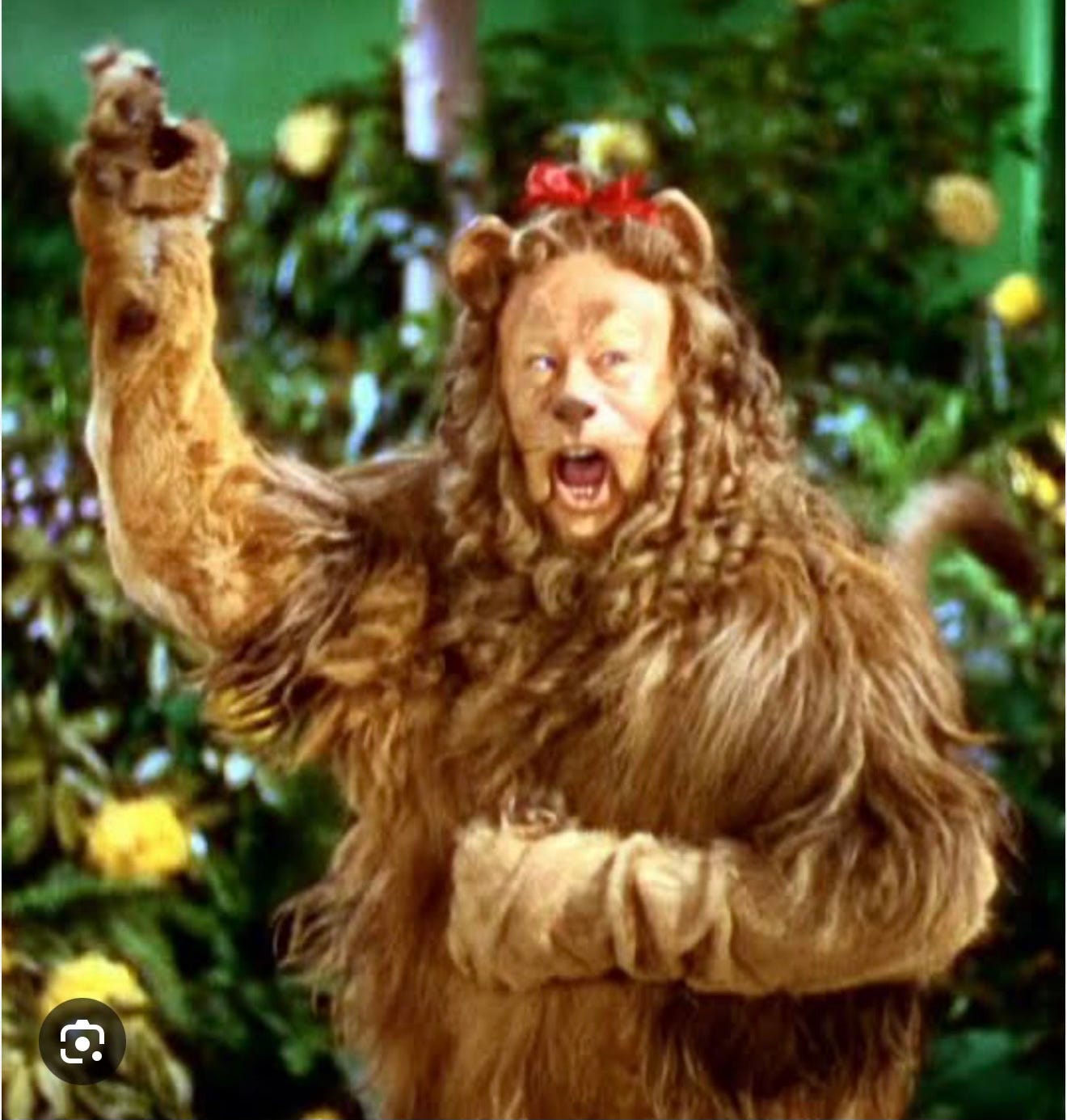
And then there will be no more memoirs. Because ultimately a machine cannot write from the heart, from the soul or from emotions sprung from hormones. It is the true lion without a heart, mere ticks of binary code.
So here is what I would like
1. I would like an investigative journalist to see whether prolific Goodreads /Netgalley reviewers received funding and if so, from whom.
2. Get rid of the sensitivity censors.
3. Readers and writers to wake up to the consequences of a collapse of free speech and be more tolerant of diverse views and opinions, take things with a pinch of salt, a bit of intelligence and a thicker skin.
4. STOP PERSECUTING WRITERS.
Rant over. Happy New Year!
Well said, you brave woman!